Hysterosalpingogram (HSG)
The Role of HSG in Fertility Diagnosis

"*" indicates required fields
"*" indicates required fields
The Role of HSG in Fertility Diagnosis
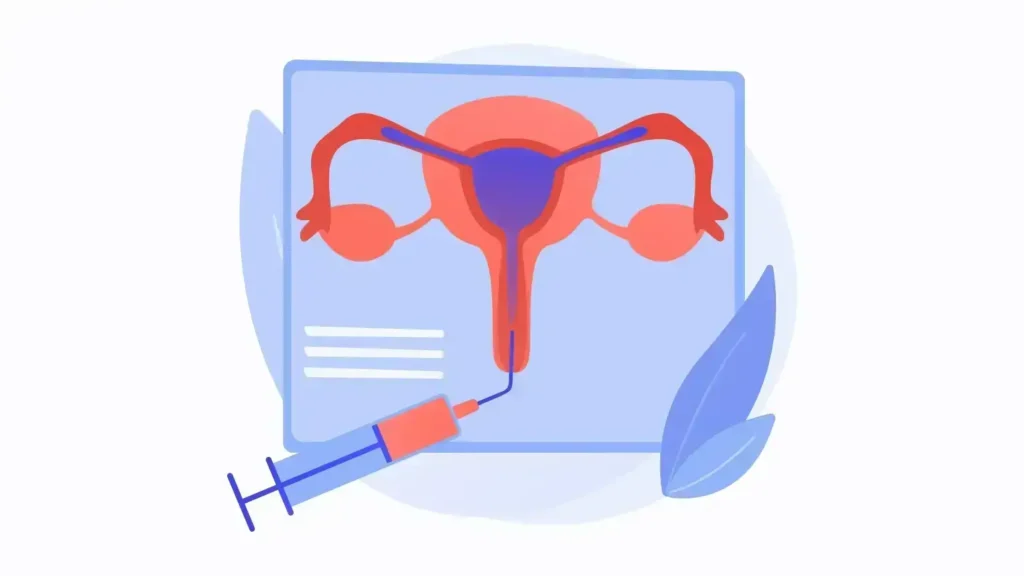
A woman’s reproductive system consists of a uterus which is connected to two functioning Fallopian tubes and a pair of ovaries that produce an egg every month during ovulation period. All of these parts are equally important when trying to conceive.
But, what happens if one or both Fallopian tubes are not functioning properly? If that happens, the ovulated egg cannot be fertilized by the sperm. Let’s find out how you can get it diagnosed easily.
A Hysterosalpingogram (HSG) is a test to visualize the uterus and the Fallopian tubes. The process takes less than 1 hour.
If the Fallopian tubes are blocked (non-patent), the contrast dye will not be able to flow out of the tubes. This image is then captured on X-ray.
The procedure is very similar to having your routine pap smear in the Specialist’s clinic as an outpatient case.
When the dye fills the uterine cavity, the X-rays taken will also help evaluate the shape of the uterus.
First, a safe contrast dye is injected into your uterus using a catheter. The dye then fills the whole uterine cavity and makes its way through the Fallopian tubes.
Admission for this test may take longer than 1 hour depending on the medical centre’s admission processes. However, the HSG only takes a short while to complete.
If the HSG results show a normal shaped iterus and the injected contrast dye spills freely our of the ends of both Fallopian tubes, this means that the test results are NORMAL.
However, if you have been trying to conceive for a long time (or more than 1 year of unprotected sexual intercourse), it is better to seek further proper medical attention. The results only indicate that the pathway of the egg and sperm is not physically obstructed. Many other underlying problems cannot be visualised by the X-ray.
Hysterosalpingogram, or widely known as HSG, is a test performed routinely as a first step in fertility evaluation for women who are trying to conceive. This test is done between day 4 to 12 of a woman’s menstrual cycle, however, she must be confirmed not pregnant at time of the test. During the test, the woman is conscious and does not need any form of anaesthesia.
Another type of pelvic (lower abdomen) examination which involves a transvaginal ultrasound scan (TVUS) is not suitable to view patency of the Fallopian tubes. This is because the diameter of the Fallopian tubes is less than 1cm and it is between 7cm to 12cm long.
HSG combined with X-ray is the perfect fertility evaluation test, not only to evaluate the patency of the Fallopian tubes, but also helps to assess the shape of the uterus and the uterine cavity. Any obstruction inside the uterine cavity caused by uterine fibroids, polyps or scar tissues can be visualised.
The test is best done in a medical centre with a fully equipped radiology department and under the expertise of a radiologist. Your Fertility Specialist is able to order this test easily for you at a medical centre that you are comfortable with.
After the test, you may experience light vaginal bleeding that can last 1 to 2 days which is common. If bleeding persists accompanied by fever and abdominal cramping, do not hesitate to check yourself in at any emergency department of the hospital. These could be signs of more serious complications and must get immediate medical attention.
This is what the result looks like. The contrast dye fills the uterine cavity and travels through the fallopian tubes. When the dye flows freely through both tubes and spills out from their ends, it indicates that the tubes are open and not blocked. The X-ray also provides information about the shape of the uterus and any abnormalities within the uterine cavity.
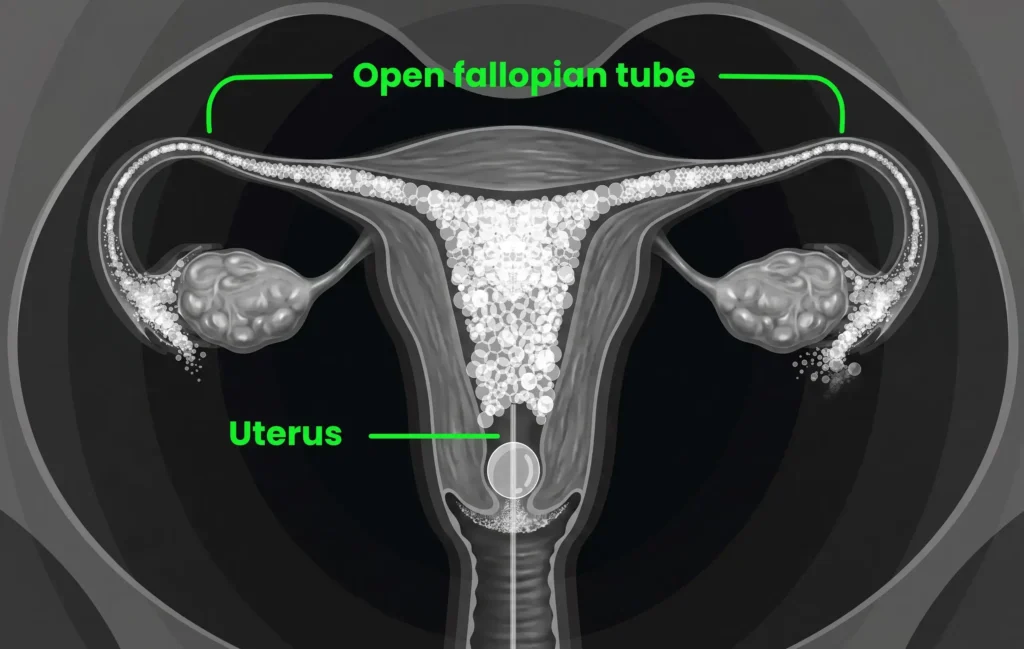
HSG with normal tube
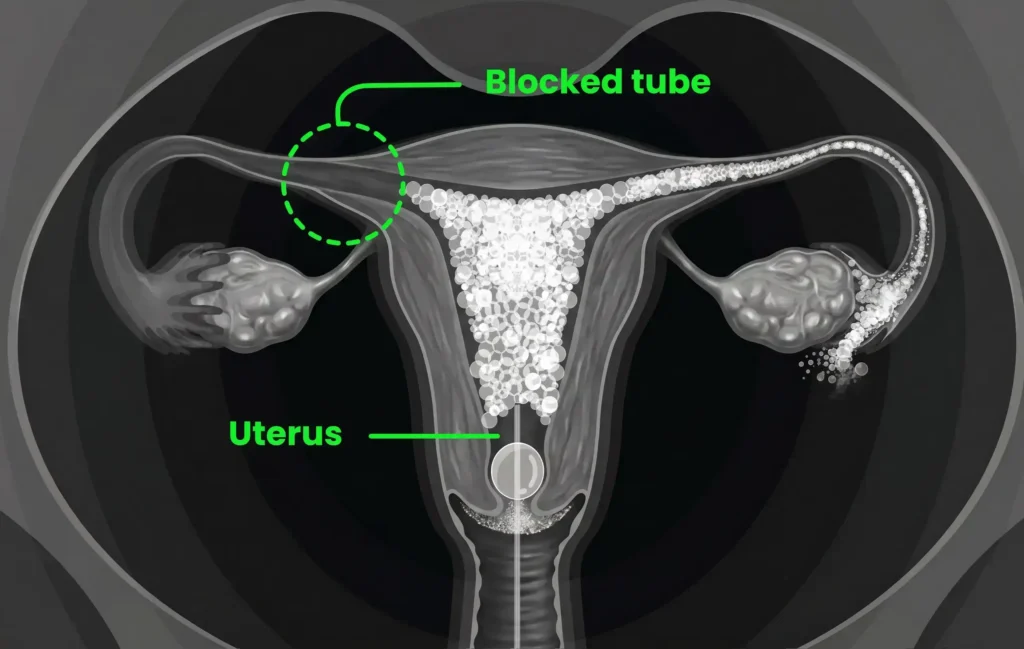
HSG with blocked tube
If you are interested in knowing more or have decided to get in touch with us, please call us at