Basics of Male Fertility
Understanding the Fundamentals

"*" indicates required fields
"*" indicates required fields
Understanding the Fundamentals

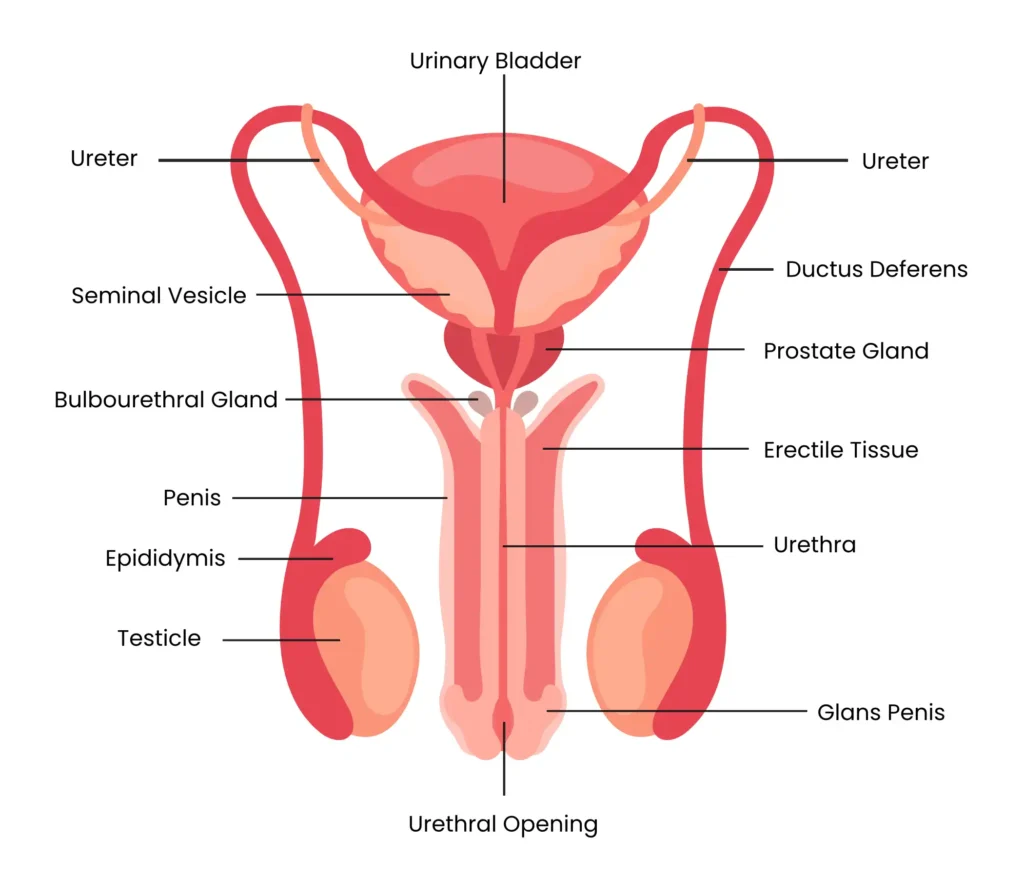
Understanding how male fertility works provides important context for the assessment and management of reproductive health. Male fertility depends on the normal structure and function of the male reproductive system and the successful production, maturation and transport of sperm.
The male reproductive system is made up of a group of organs that make up the reproductive system and urinary system. Some of these organs include :
The primary functions of the male reproductive system are :
The position of the testes outside the body maintains a cooler temperature than the body, which is essential for normal sperm development.
Sperm development (spermatogenesis) takes place in the seminiferous tubules of the testes and is regulated by hormones from the brain:
The process of producing fully developed, motile sperm takes approximately 70 days. After formation, sperm undergo maturation in the epididymis, where they gain the ability to swim and fertilise an egg.
During ejaculation, mature sperm exit the epididymis and travel through the vas deferens. Fluids from the seminal vesicles and prostate gland mix with sperm to form semen, the fluid expelled during ejaculation.
Male factor infertility contributes to a significant proportion of infertility cases, either alone or in combination with female factors. A clear understanding of how sperm are produced and transported helps explain why certain evaluations and treatments are necessary when fertility issues arise.