Let's get in touch
  • Operating Hours

  • KL Fertility Centre

  • Write to Us

    "*" indicates required fields

    Name*

    Book an Appointment

    "*" indicates required fields

    Name*

    Transvaginal Ultrasound

    Pelvic Imaging for Accurate Fertility Assessment

    Transvaginal Ultrasound

    What Is a Transvaginal Ultrasound?

    A transvaginal ultrasound is an imaging procedure that uses high-frequency sound waves to create detailed images of the pelvic organs. Unlike a traditional abdominal ultrasound, which is performed externally, the transvaginal ultrasound involves inserting a small, lubricated probe (transducer) into the vagina. 

    This approach allows fertility specialists to obtain clearer, more precise images of the reproductive organs, which is especially important for diagnosing and managing fertility concerns.
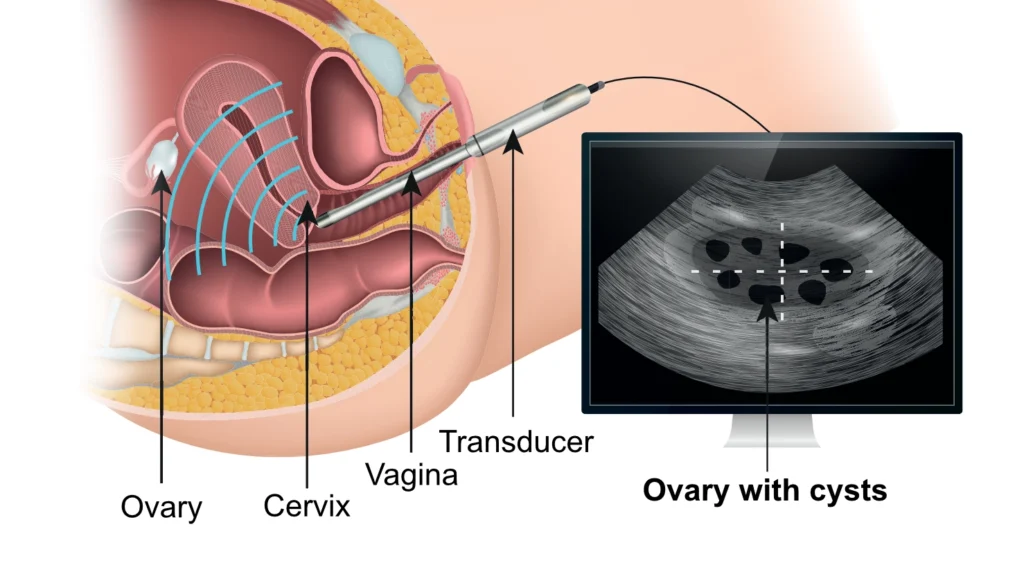
    Illustration for performing transvaginal ultrasound

    What Does a Transvaginal Ultrasound Check?

    This procedure is a cornerstone of fertility assessment and gynaecological care. A transvaginal ultrasound enables your specialist to:

    • Monitoring ovarian follicles (crucial for assessing ovarian reserve and ovulation tracking)

    • Assessing the uterine lining (endometrium)

    • Checking for ovarian cysts, fibroids, or polyps

    • Diagnosing conditions like PCOS, endometriosis, or tubal abnormalities

    • Confirming early pregnancy and checking foetal development

    At KL Fertility Centre, our team utilises transvaginal ultrasound to provide accurate, real-time insights that guide your fertility journey and treatment decisions.

    When Is a Transvaginal Ultrasound Performed?

    Your fertility specialist may recommend a transvaginal ultrasound at various points depending on your individual needs. Common scenarios include:


    Initial fertility assessment
    • To get a baseline picture of your reproductive organs and check any issues that could impact fertility.
    Ovulation monitoring
    • Done around days 10-14 of your cycle to track follicle growth and predict ovulation, essential in timed sexual intercourse or IUI cycles.
    During fertility treatments
    (e.g. IVF)
    • To monitor how your ovaries are responding to stimulation medications and to time procedures like egg retrieval or embryo transfer.
    Early pregnancy
    • To confirm pregnancy, assess the location (intrauterine vs ectopic), and check for foetal heartbeat. 
    Follicles in normal ovary
    Dominant follicle in a normal ovary
    Polycystic ovary
    Stimulated ovary

    Our clinical team has extensive experience performing and interpreting transvaginal ultrasounds, ensuring you receive accurate information and compassionate care throughout your fertility journey.

    What to Expect During the Procedure?

    Many women feel anxious before their first transvaginal ultrasound, but the procedure is quick, safe, and minimally uncomfortable.

    Preparation:
    • You’ll be asked to empty your bladder before the scan. Unlike abdominal ultrasounds, a full bladder may not be necessary.
    During the scan:
    • You will lie down on an examination bed, typically with your knees bent and legs relaxed apart. 
    • A thin ultrasound probe, covered with a sterile sheath and lubricating gel, will be gently inserted into your vagina.
    • The probe may be moved slightly to get images from different angles.
    • The scan usually takes about 5-10 minutes.
    • You might feel slight pressure or discomfort.
    After the scan:
    • You can resume normal activities immediately.
    • The ultrasound images captured during the scan will be reviewed by the specialist right after.

    Discover Our Quality Treatment & Services

    If you would like to schedule a transvaginal ultrasound or have questions about your fertility, please reach us at