Fallopian Tube Damage and Blockage
Tubal Factor Infertility: Causes, Diagnosis and Treatment

"*" indicates required fields
"*" indicates required fields
Tubal Factor Infertility: Causes, Diagnosis and Treatment
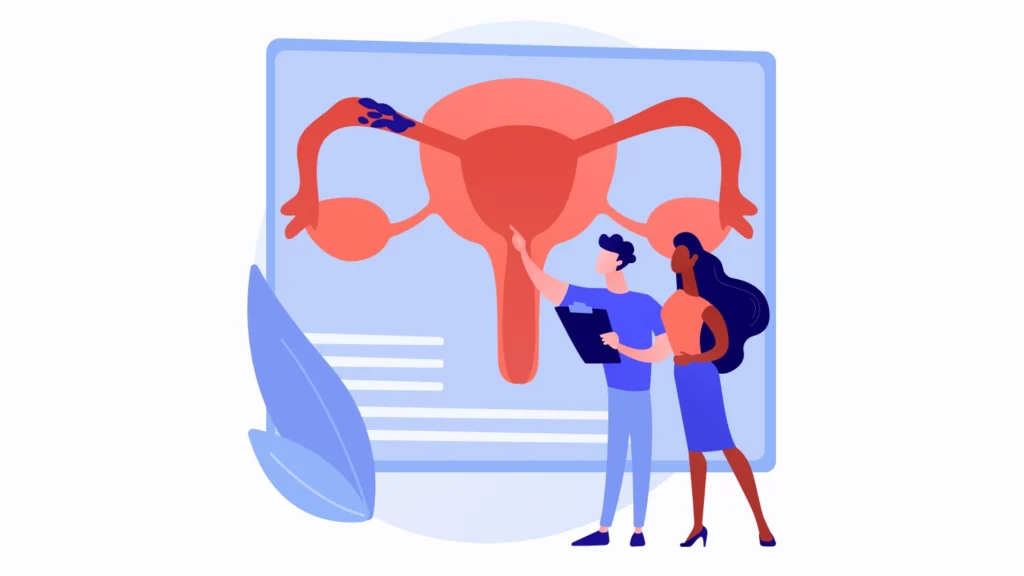
Fallopian tubes are the two thin tubes located between the uterus and the ovaries. Their primary function is to transport an egg from the ovary to the uterus. It also acts as an important passageway for sperm to reach the egg for fertilisation to occur, as well as for the fertilised egg (or embryo) to travel to the uterus for implantation.
If the fallopian tubes are blocked or damaged, these processes will be affected and therefore would make natural pregnancy difficult or even impossible.
When one or both fallopian tubes is blocked / misshapen / damaged, a sperm and an egg cannot meet, which would prevent natural pregnancy from occurring. In certain situations where the tube is only partially blocked, sperm may be able to pass through and fertilise with an egg, however, the embryo will not be able to travel to the uterus.
This condition can give rise to a complication called ectopic pregnancy, which may require emergency surgery to treat.
Several medical conditions or past health events can lead to blocked or damaged fallopian tubes, including:
This is one of the most common causes of tubal infertility. PID is an infection of the reproductive organs, often resulting from sexually transmitted infections like Chlamydia or Gonorrhoea. It can cause scarring and adhesions in the tubes that would result in blocked or damaged tubes.
Hydrosalpinx occurs when the end of the tube near the ovary is blocked, causing fluid to accumulate. This fluid can contain toxins that make the uterine environment less suitable for pregnancy. The tube may become swollen and distended, further impairing the movement of sperm and embryos.
This condition occurs when tissues of the uterus lining grow outside of the uterus. The site of these tissues can sometimes be on or near the fallopian tubes. They can induce inflammation, scarring, and adhesions on or surrounding the tubes that will in turn affect the tubal function.
A previous ectopic pregnancy (where a fertilised egg implants in the fallopian tube) can damage the tube or result in its surgical removal.
Surgeries in the pelvic area, such as for a ruptured appendix, ovarian cysts or endometriomas, can sometimes lead to the formation of scar tissue that will affect the fallopian tubes.
The following tests are available to assess the fallopian tubes:
This is a radiographic procedure where an X-ray image is taken while a contrast dye is injected into the uterus and fallopian tubes. The dye fills the tubes, allowing the examiner to see if there are any blockages or abnormalities.
In this procedure, an ultrasound is performed while a sterile saline solution is injected into the uterus and fallopian tubes. The saline helps to create a clearer image of the uterine cavity, allowing the examiner to assess for any abnormalities, and helps to visualise the movement of the saline across the tubes, allowing the examiner to see if there is any blockage.
This is similar to Saline Infusion Sonography except that a contrast dye is used to inject into the uterus instead of saline.
This is a surgical procedure that involves making a small incision on the abdomen and inserting a thin camera (laparoscope) to directly visualise the pelvic organs. A dye will be injected into the uterus and tubes during this time, and the Doctor will visually assess whether the dye has spilled out on the ends of the tubes to indicate that they are not blocked.
As fallopian tubes play an important role in natural pregnancy, their assessment will assist your Doctor in advising the appropriate treatment options for you.
If both or either tubes are normal, you may still have the option to try for natural conception first, with or without controlled ovarian stimulation (COS).
This will be advised by your Doctor based on other factors, such as your age, your ovarian reserve, your health / medical conditions, as well as the duration you have been trying to conceive.
If both or either tubes are normal and natural conception has not proved to be effective, your Doctor may advise for artificial insemination, such as intrauterine insemination (IUI), intracervical insemination (ICI), or intravaginal insemination (IVI).
The concept of artificial insemination is to reduce the distance in which the sperm needs to travel to reach the egg.
This procedure involves collecting and preparing the husband’s sperm before directly delivering them into the uterus (IUI) or the cervix (ICI) or the vagina (IVI) to increase the likelihood of pregnancy.
If your tubes are found to be blocked or damaged, IVF may be the only treatment option available to you. IVF offers the best chance of conception as it completely bypasses the fallopian tubes.
If a hydrosalpinx is present, your Doctor may recommend you to remove the affected tube to improve your fertility outcomes as it may impede natural or assisted conception to occur.
Blocked or damaged fallopian tubes are a common cause of infertility, but with early diagnosis and appropriate treatment, many women can go on to conceive and have healthy pregnancies.
Speak with our Fertility specialist to explore your options and take the next step in your journey toward parenthood.
If you have concerns about your fallopian tubes or would like to discuss your fertility options, please reach us at