Basics of Male Fertility
Understanding the fundamentals


Understanding the fundamentals
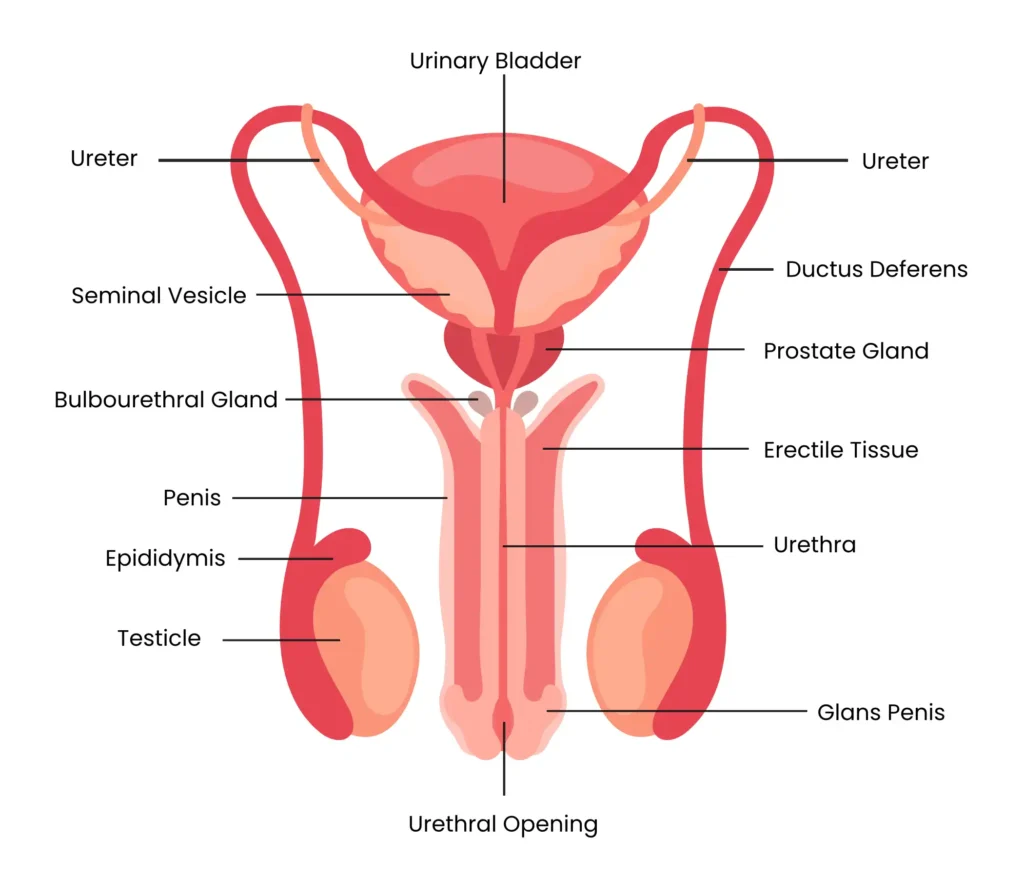
The testes are a pair of egg shaped glands that sits in the scrotum outside of the body at the base of the penis.
The testes has two separate but related roles :
The testes develop inside the abdomen in male fetus and then move down into the scrotum just before birth. This process ensures testes have a cooler temperature to make sperm and for normal testicular function.
Sperm production (spermatogenesis) takes place in the testicles . The process of spermatogenesis is controlled by signals (hormones) from the brain ( from a gland called pituitary).
Pituitary produces two hormones:
Spermatogenesis is a continuous process. It takes about 70 days to complete the development of sperm that are able to swim and fertilise an egg.
Sperms that are produced will undergo a process of maturation in the epididymis ( a structure at the top of the testicle). This maturation process gives the sperm the ability to swim and fertilise an egg.
During ejaculation, sperm travels via vas deferens, a 30 cm tube that connects the testes to two other male reproductive glands called seminal vesicle and prostate.
Semen ( the fluid that are ejaculated) is produced by these two glands.
Final ejaculate is a combination of sperm and semen.